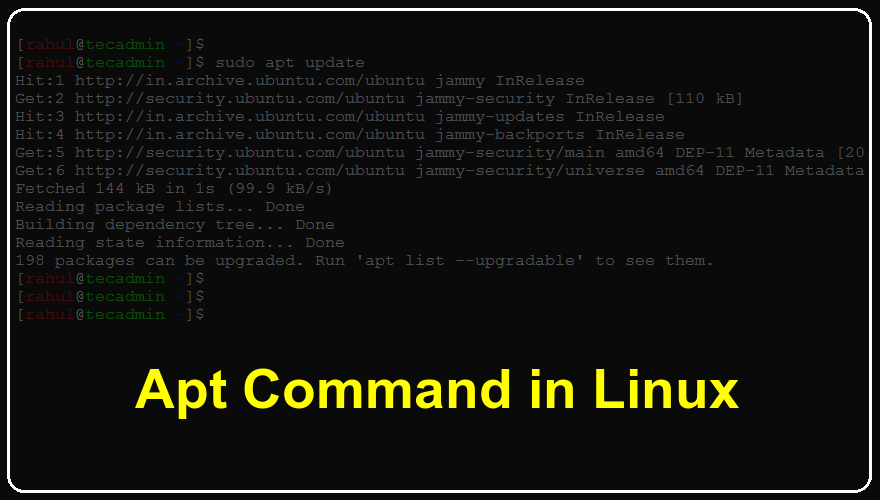
General ArticlesWhat does the apt update Command Do?By RahulDecember 21, 2024If you’re a Linux user, and you use distros such as Ubuntu or Debian, then you will have surely seen…
General ArticlesA Guide to “apt autoremove” – Clean Up Your SystemBy RahulDecember 18, 2024When you use Linux, especially Ubuntu or other Debian-based systems, you may notice that over the time your systems disk…
Linux Performance & OptimizationHow to Remove Unused Packages on Ubuntu & DebianBy RahulJuly 1, 2024Over the time, the Linux systems can have a large number of packages that are no more in use. These…
General ArticlesApt Remove vs Apt Autoremove vs Apt Purge: Key DifferencesBy RahulMarch 29, 2023Managing packages on Linux-based systems can be a complex task, especially when it comes to uninstalling software. Debian, Ubuntu, and…
DebianUsing the Apt Package Manager on Debian-based SystemsBy RahulMarch 29, 2023Package management is an essential component of modern operating systems, and Ubuntu and Debian are no exceptions. These Linux-based systems…
UbuntuApt configuration file options /etc/apt/apt.confBy RahulMarch 29, 2023The Apt package manager is a powerful tool for managing software packages in Ubuntu and Debian. It allows you to…
Linux Commands12 Apt Command Examples in Ubuntu & Debian LinuxBy RahulJanuary 3, 2023The apt command is one of the most powerful and versatile tools in the Linux operating system. It provides users…
UbuntuHow to Remove Packages from Ubuntu & DebianBy RahulApril 17, 2021The APT (Advanced Package Tool) is a powerful package management tool for Debian based systems. It provides powerful command-line tool…
Ubuntu(Fixed) apt-add-repository command not foundBy RahulNovember 9, 2020The apt-add-repository command is a symlink of the add-apt-repository command. Which is used to add third party PPA to our…
DebianHow to List Installed Repositories In Ubuntu & DebianBy RahulOctober 5, 2020A repository is the collection of packages for a Linux operating system. You can create a central repository containing the…