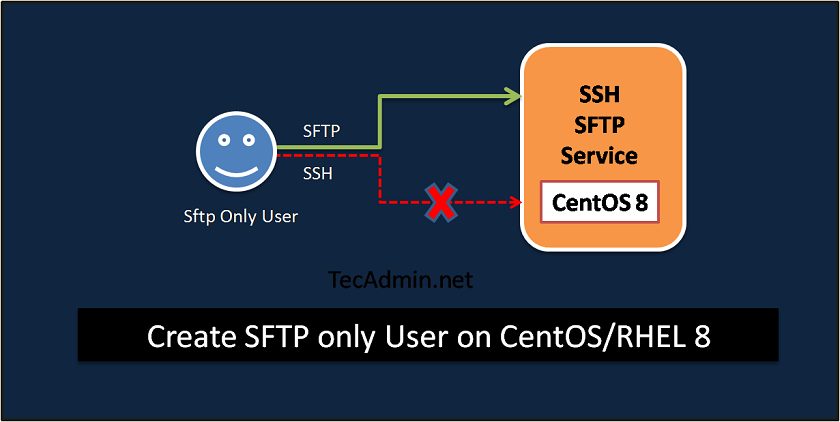
SFTP (SSH File Transfer Protocol) is a secure file transfer protocol between two systems. It runs over SSH protocol and shares the same port 22. This tutorial will help you to create SFTP only access users (without ssh access) on CentOS 8 and RedHat 8 systems. The user can connect the server with SFTP only and allowed to access the specified directory. Users can’t SSH into the server. Follow the below tutorial to create sftp only account on CentOS 8 and RHEL 8. Step 1 – Create Account First of all, create a user account for the sftp access. For…
Author: Rahul
Django is a high-level Python Web framework for the rapid development of applications. It is developed by the Django Software Foundation in the year 2005. At the time of editing this tutorial, Django 3.0.3 is available for application development. This tutorial helps you to install and create a sample application with Django on CentOS 8 and RHEL 8 Linux systems. Step 1 – Install Python CentOS 8 minimal installation systems do not have default Python installed. You can install Python 3 on your CentOS 8 via default repository. Just execute the following commands to install Python and PIP on your…
Webmin is a web hosting control panel like Cpanel which provides easy to use interface for managing Unix-like systems. It provides options to set up user accounts, Apache, DNS, file sharing and much more. It is the best web control panel that is freely available. This article will help you to install and configure Webmin on CentOS, RHEL, and Fedora systems. Kindly go through the below steps. At the time of the last update of this article Webmin 1.941 is the latest available version to download and install. Prerequsities The following are the optional dependencies for the Webmin. You can…
MySQL is an open-source, relational database management system. At present, it is being developed under the Oracle Corporation. The MySQL 8 is the latest version available for the installation and use of the production application. MySQL 8.0 has many improvements and 2x processing speed over the previous version. In this version, MySQL team includes document store for developing both SQL and NoSQL document applications using a single database. This tutorial will help you to install MySQL 8 on CentOS 8 and RHEL 8 systems. Prerequisites You must have shell access with sudo privileged account on CentOS 8 system. Step 1…
How to Install Ruby on CentOS 8. Ruby is an object-oriented programming language focused on simplicity and productivity. RVM (Ruby Version Manager) is a tool for installing and managing multiple Ruby versions on single operating systems. This tutorial will help you to install RVM on your system. After that install the latest Ruby on CentOS 8. This tutorial will also work with RHEL 8 and Scientific Linux 7. Step 1 – Prerequsities First of all, install all the required packages for the Ruby installation on your CentOS 8 system. Use the following command to install the required packages: sudo dnf…
Zabbix Agent is a process that runs on remote machines, which need to monitor through the Zabbix server. The agent collects the data on the remote server and send back to Zabbix server when requested. Zabbix agent must be installed on all the remote systems that need to be monitor through the Zabbix server. Basically, there are two types of checks: Passive Check – Zabbix Agent sent data to server on their request. Active Check – Zabbix Agent sends data periodically to server. After installing zabbix server on your system. Now we are moving to install agent on remote system’s.…
Welcome to the guide on installing Wine 9.0 on Fedora! Wine is a compatibility layer that enables you to run Windows applications on Linux and other Unix-like operating systems. With the latest version of Wine, you can enjoy improved compatibility and performance when running your favorite Windows software on your Fedora system. This step-by-step tutorial will walk you through the installation process, ensuring that you can seamlessly integrate Wine into your Fedora environment and start using your preferred Windows applications without hassle. Let’s get started! Prerequisite You must have a sudo privileged account for the Wine installation on Fedora. Wine…
Dovecot is an open-source service for IMAP and POP3 on Unix-like operating systems. It focused on lightweight and secure mail server available for most of the Linux operating system. This tutorial will help you to install and configure POS3/IMAP using Dovecot on CentOS 7 Linux system. Step 1 – Installing Dovecot Dovecot package is available under the default yum repositories. Simply run the below command from terminal to install Dovecot packages on your CentOS 7 system. sudo yum install dovecot -y Step 2 – Configure Dovecot Once the installation finished, configure Dovecot server as per your requirements. Here is the…
Mattermost Desktop is the client application for the Desktop systems to user their mattermost account. You must have Mattermost server installed in your self-managed instance or signup for the Mattermost cloud. For this tutorial, I have created an account on Mattermost cloud free version. You can go with professional or enterprise edition as per your requirements. This tutorial describe you to how to install Mattermost desktop client on Ubuntu 18.04 LTS Linux system. Prerequisites You must have Desktop install on your Ubuntu system. Login as sudo privileged account on your Ubuntu 18.04 system. Open terminal and update current system packages…
A swap file is an essential component of a Linux operating system that helps improve performance by providing additional virtual memory. It is a disk space that is reserved for use as a virtual memory when the system’s physical memory (RAM) is filled up. Creating a swap file in Linux can help prevent system crashes and instability. In this article, we will discuss how to create a swap file in Linux step by step. We will explain the necessary commands and procedures that you need to follow to create a swap file. Create Swap File (Quick Instructions) Here is the…